Introduction: Change in Search, Are You Prepared?
Have you ever realized that there have been changes to your organic traffic? It means that the Search Generative Experience of Google has really changed the way users search for information. Optimizing Google SGE is now an imperative in digital marketing.
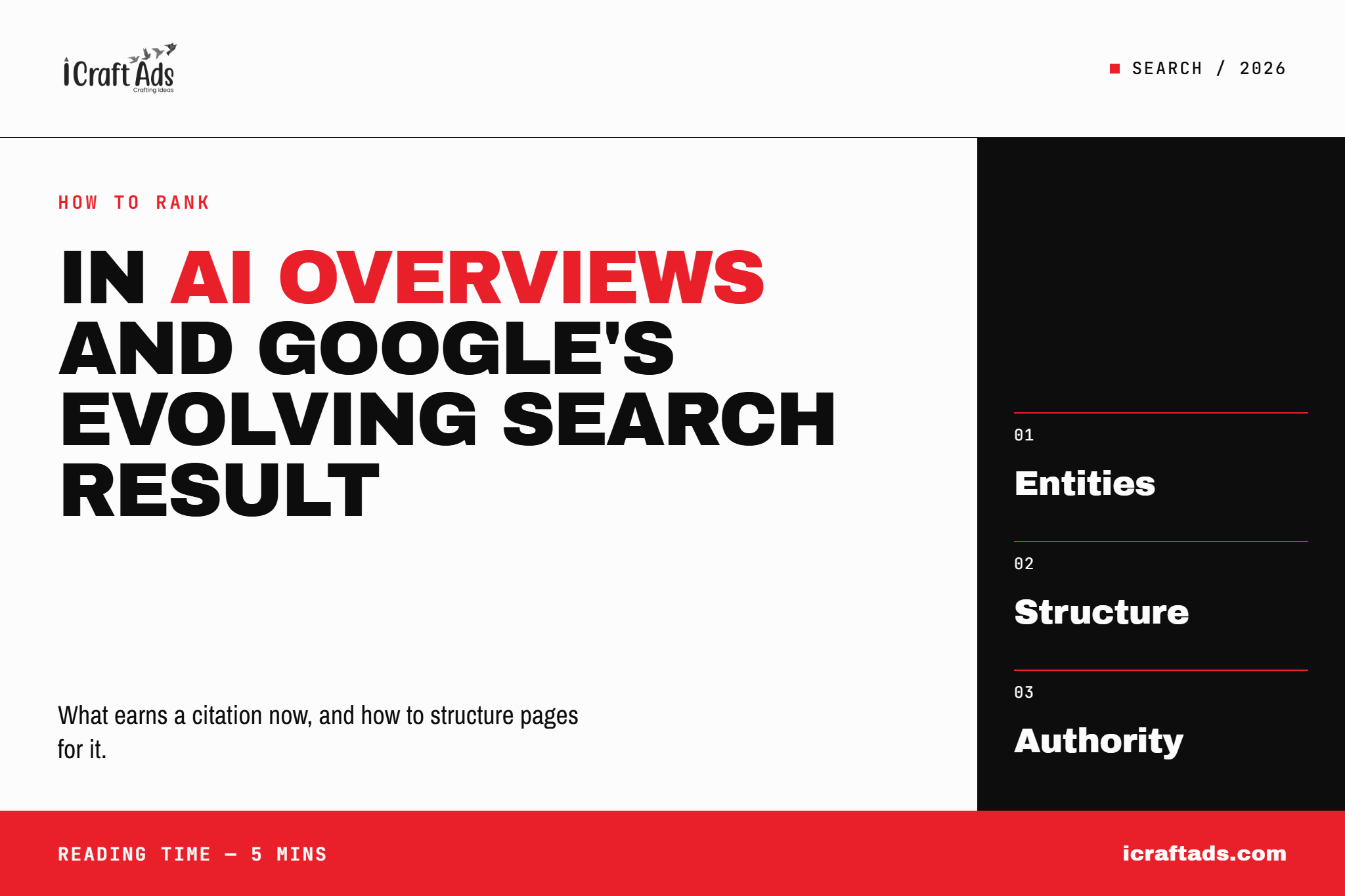
AI Overviews hold the number one spot in search results in 2026 where the answers to the user’s questions are provided before the traditional blue link even appears. This leaves just one choice for business: if you don’t optimize your content for generative search SEO, you are falling behind in comparison to your competitors.
This guide will provide the list of steps you should take along with tips on how to perform effective generative search SEO to be present in AI Overviews, page one, and bring in traffic.
What is Google SGE and Why is it Important in 2026?
Google SGE stands for Google Search Generative Experience. This is the feature offered by Google that creates an answer based on information gathered from different sources to give it in the form of a summary or a conversation at the top of the search engine results page.
It is convenient for users. It is revolutionary for marketers. The importance of Google SGE optimization in SEO has reached its highest level because of the following reasons:
- AI Overview appears for 30-40% of all search queries by 2026
- Clicks tend to go to the sources cited in AI snapshot and not to the highest-ranking pages
- It is no longer sufficient to be on top positions by keywords only
- Being mentioned in AI Overviews increases brand’s trust and CTR greatly
How Google AI Overviews Actually Work
Before you can optimize for Google’s AI overviews, it’s important to understand exactly what happens. Google’s AI pulls from trusted, well-structured web pages to build its generated answer. It prioritises sources that:
- Directly answer the user’s question within the first 100 words
- Use clear, structured formatting (H2s, H3s, bullet points, and concise paragraphs)
- Demonstrate E-E-A-T – Experience, Expertise, Authoritativeness, and Trustworthiness
- Contain schema markup and structured data that helps Google understand the content
- Are mentioned by other authoritative sources in the same topic area
The AI doesn’t simply copy-paste content it infers and summarises. Your job is to make it as easy as possible for the AI to understand, trust, and reference your content. This is the foundation of all strong generative search SEO.
Core Google SGE Optimization Strategies for 2026
1. Create Your Content in a Format That Enables Direct Answer Extraction
SGE loves direct answers to the queries. Every blog post, website or article should start with an answer to the query that you’re targeting. This format is also referred to as an ‘inverted pyramid’ format. It works perfectly for optimizing your SGE.
Add descriptive H2 and H3 headings that use natural language people use when making queries. For example, instead of writing ‘Benefits of Email Marketing’, you could try ‘What are the benefits of email marketing for small businesses?’.
2. Add Schema Markup and Structured Data
Schema markup is one of the most potent yet underutilized generative search SEO techniques. By adding structured data like FAQ schema, HowTo schema, Article schema, and Organisation schema to your site, you provide Google’s AI with an easy to understand map of your site.
The following is a list of important schema types for 2026 Google SGE optimization:
- FAQ Page schema – best suited for question-driven content and AI Overviews
- How To schema – best suited for guides and step by step instructions
- Article and Blog Posting schema – tells Google that the content on your page is editorial and authoritative
- Product and Review schema – key for e-commerce brands seeking to optimize for SGE product searches
- Local Business schema – – important for local SEO in an AI search environment
3. Establish E-E-A-T Elements in Your Website
While E-E-A-T has always been important for SEO, in generative search SEO, it is the determining element of whether Google will trust your content enough to use it in an AI Overview.
This is how to create powerful E-E-A-T signals for SGE optimization:
- Include author bios with their qualifications and linkedin profiles in each blog post
- Include testimonials and success stories on services pages
- Acquire backlinks from reputable industry websites, news sources, and niche directories
- Always keep your factual content fresh and updated; old statistics are a big no-no for Google’s AI
- Include trust factors such as certificates and awards
4. Target Conversational and Long-Tail Keywords
AI-driven searches are conversational by default. Searchers are now increasingly using complete phrases such as ‘How do I optimize my website for Google SGE?’ instead of using fragmented keywords. In this respect, the targeting of long-tail and question-based keywords could be one of the most effective AI-driven search engine optimization tips at the moment.
Use tools such as Google People Also Ask, AnswerThePublic, and AlsoAsked to identify the actual questions being asked by the searchers. Create content that directly addresses those questions in the best way possible. Use topic-based clusters of questions in your website to showcase your knowledge on the subject.
5. Optimise Page Speed and Core Web Vitals
It is not all about content when it comes to optimizing your website according to the Google Search Generative Experience. Google’s AI algorithm prefers websites that offer fast page speed, are mobile-friendly, and provide good user experience. Core Web Vitals such as Largest Contentful Paint (LCP), Interaction to Next Paint (INP) and Cumulative Layout Shift (CLS) will continue to be important ranking factors in 2026.
Test your website using the PageSpeed Insights tool from Google. Make sure you compress images, enable lazy loading and use a CDN. Avoid render-blocking JavaScript.
Quick Checklist: Is Your Content SGE-Ready?
Run through this quick checklist before you publish anything in 2026:
- Does your first paragraph give the answer to the targeted question?
- Are your H2 and H3 tags in the form of questions or topic statements?
- Does your page have FAQ schema or other structured data?
- Does the page demonstrate first-hand experience or expert knowledge?
- Are all statistics and facts from credible, mentioned sources?
- Is the page mobile-optimised and loading in under 2.5 seconds?
- Are there internal links to authoritative content?
- Is there any author biography present with credible credentials?
Conclusion: The Future of Search Is Here
It’s not a trend; Google SGE is a fact of life. Those businesses and marketing departments who will be capable of optimizing their search in 2026 with the help of Google SGE optimization will have a significant advantage over the companies who are still trying to keep up with old SEO techniques.
Those brands that are currently receiving the highest visibility in the AI Overviews have a knack for treating content as a valuable resource, structuring it for the AI understanding, and presenting solid expertise behind it. That’s how you can create a recipe for success along with technical SEO and generative search SEO techniques.
Apply these generative search SEO tips now and if you need an experienced digital marketing team to assist you in this process, feel free to contact ICraftAds.
Frequently Asked Questions (FAQs)
What is the difference between Google SGE and traditional SEO?
Traditional SEO is all about placing websites in the regular 10 blue links. On the other hand, Google SGE optimization is beyond that. It entails ensuring that the content is mentioned in the AI-driven summaries provided by Google that precede the regular search results.
Can small businesses rank in AI Overviews?
Definitely. Google’s AI Overviews are not about big companies only. The most important thing here is the quality, relevance, and structure of the content. A well-optimised small business blog targeting a niche query can outperform a large brand if it directly answers the question with clear, trustworthy content. This is one of the most encouraging generative search SEO tips for growing businesses.
How long does it take to appear in AI Overviews?
There’s no fixed timeline. Some pages are picked up within weeks; others take months. Regular Google SGE optimization, regular posting of quality structured content, and building of backlinks speed up the process considerably.
Do I need to change my entire SEO strategy for SGE?
No, many good SEO practices remain the same: high-quality content, good keyword research, technical SEO, and link building. The difference lies in how you implement those practices. Adjusting your SEO strategy to accommodate generative search SEO is an evolution rather than a revolution.